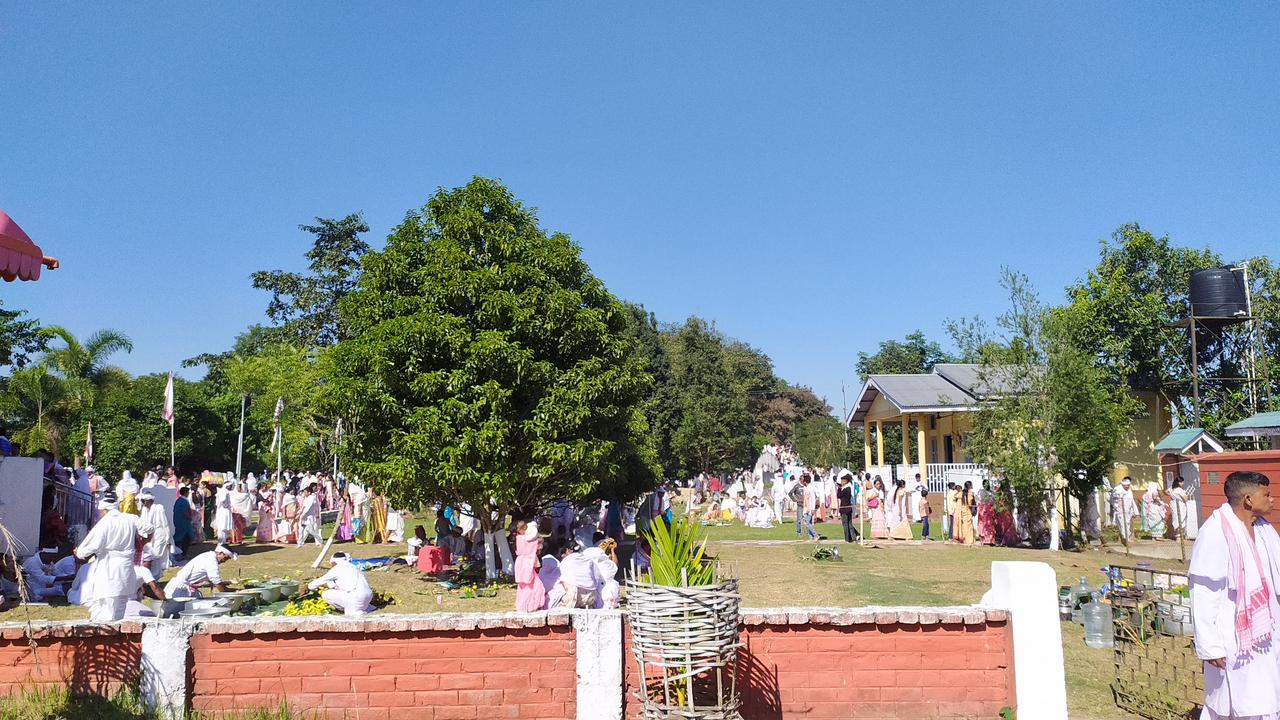
Welcome to Borbheti Temple
A sacred space where devotion and peace unite
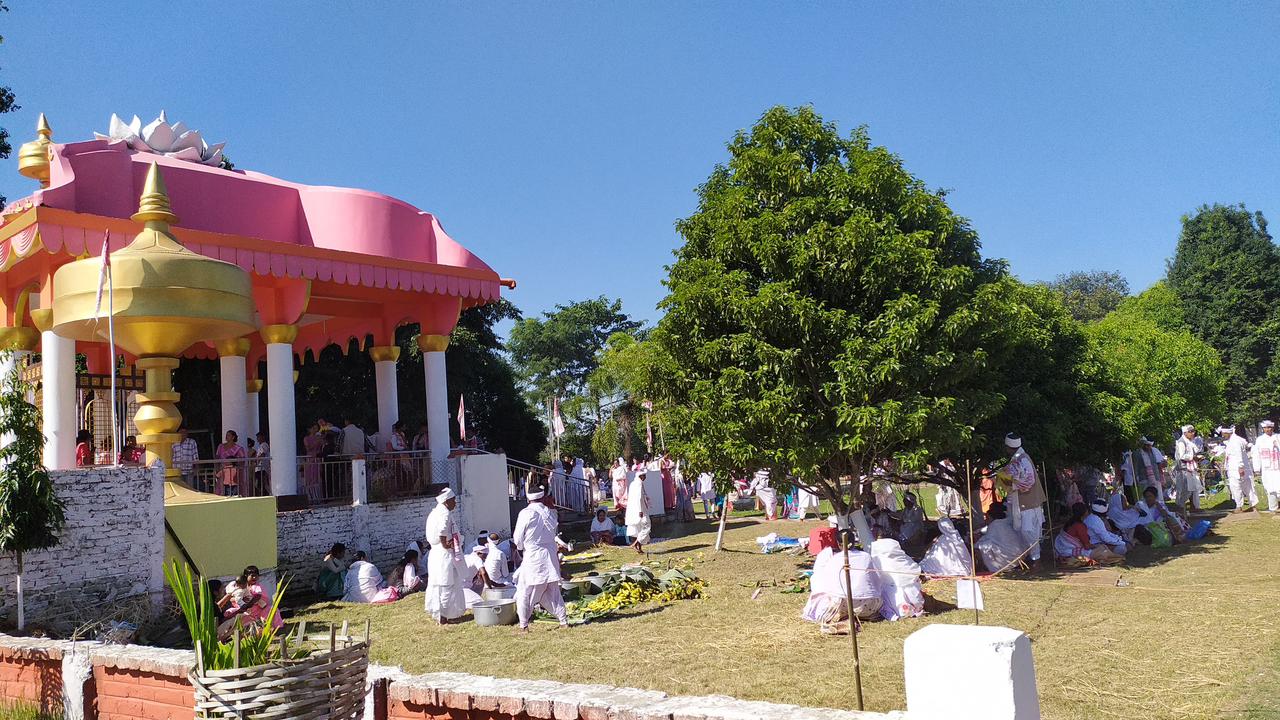
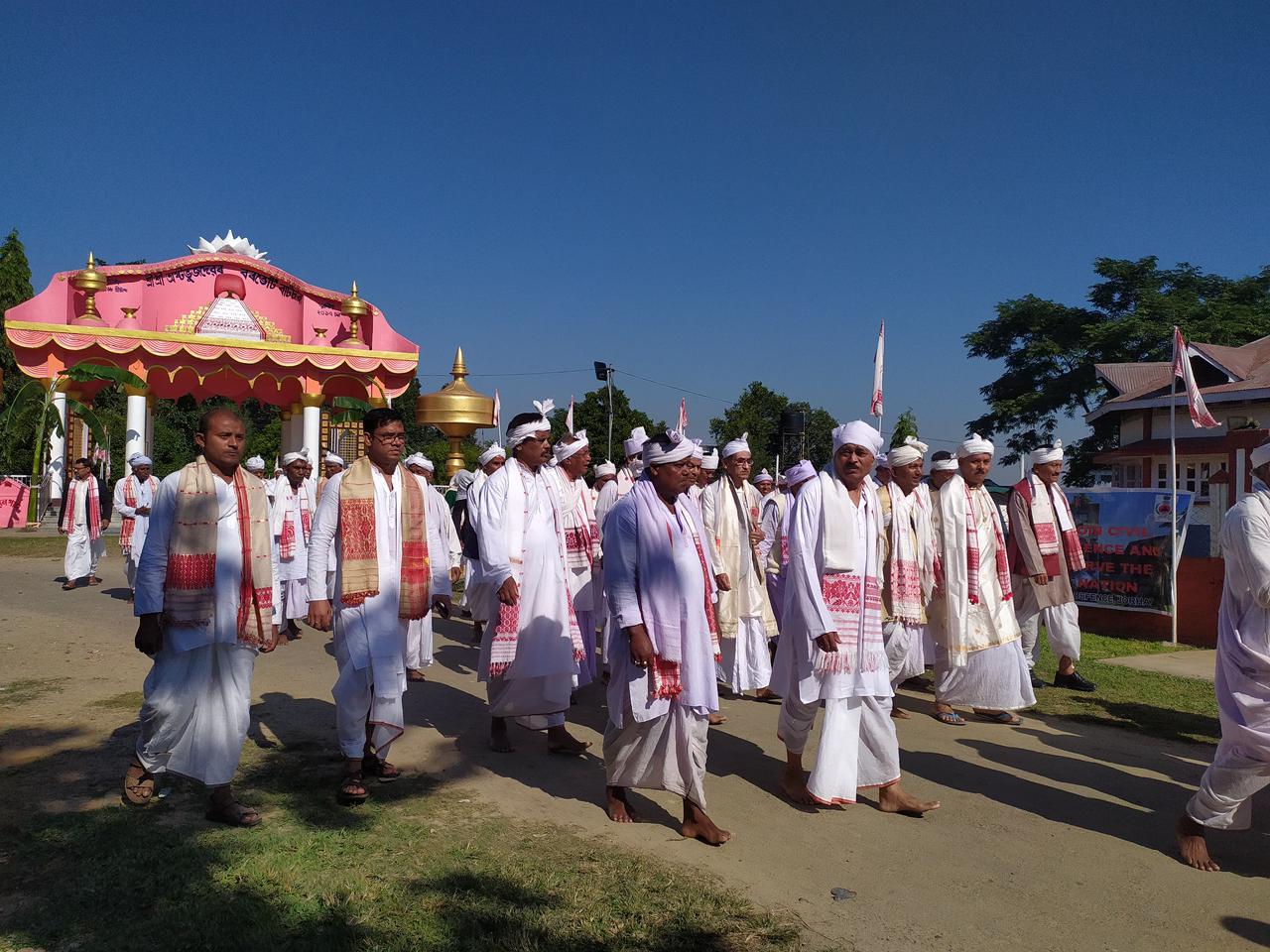
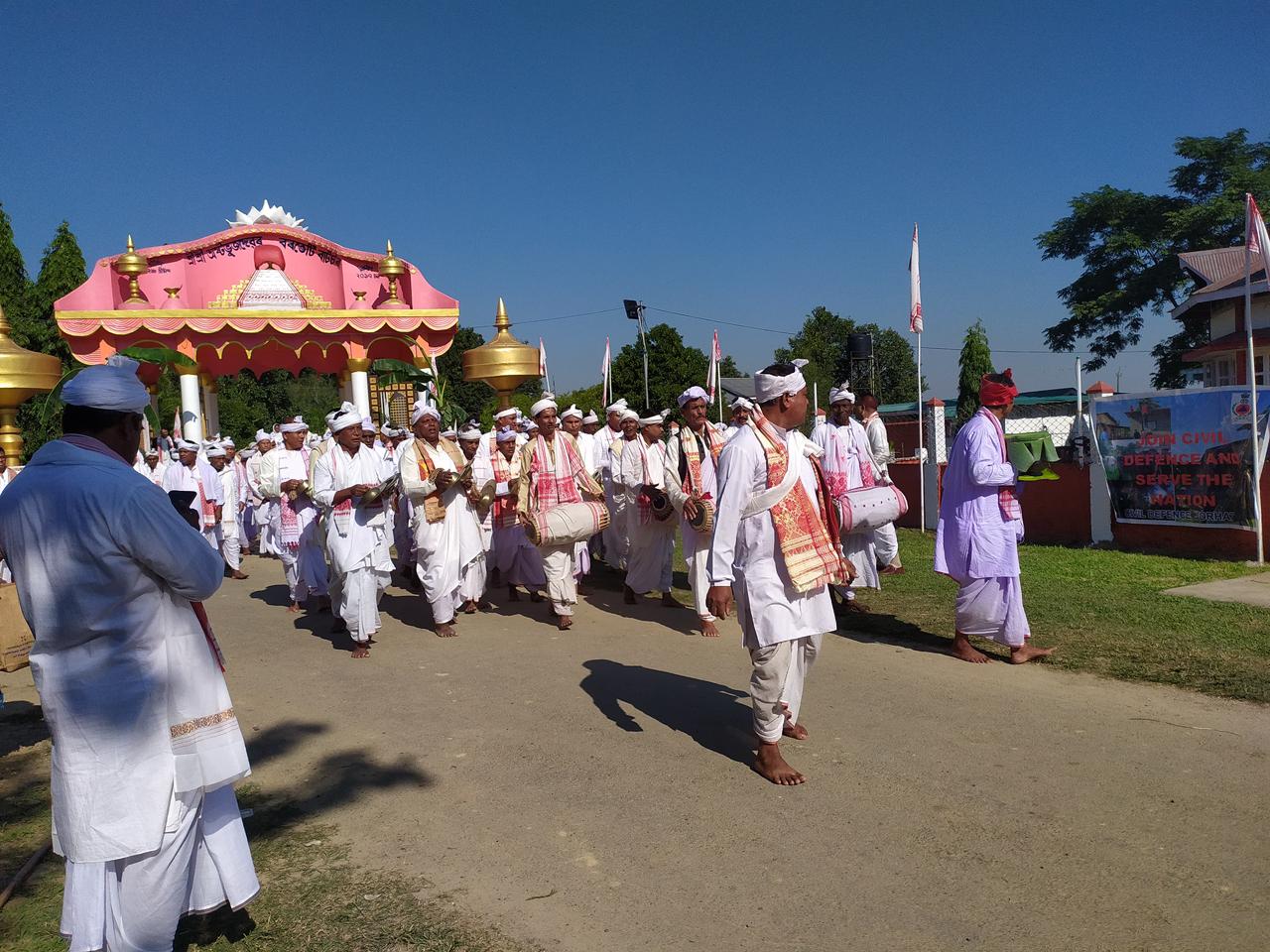
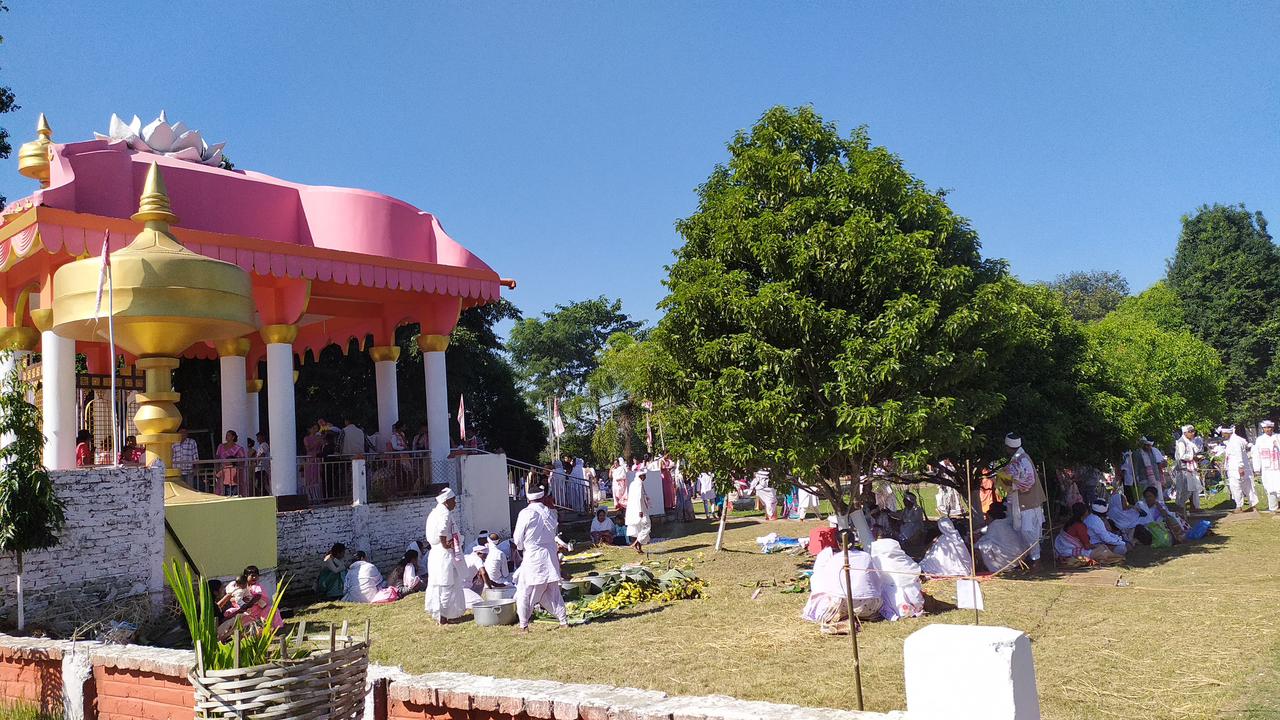
About Borbheti Temple
Discover the divine legacy, ancient legends, and architectural marvel of one of Assam's most revered spiritual destinations

800,000+
Founding Devotees
Introduction
Established in 1768 by Sri Sri Astabhuj Dev, Borbheti Temple represents one of the most remarkable feats of communal devotion in Assamese history.
What began as a sacred relocation from Sutiapata evolved into a monumental spiritual center, built through the collective effort of eight lakh devotees united in faith and purpose.
360×120
Square Feet Platform
90 ft
Platform Height
Temple Legend
The Divine Revelation
According to ancient lore, the temple's location was revealed to Sri Sri Astabhuj Dev in a divine vision. The deity appeared in his dreams, guiding him to establish a sacred space where devotees could attain spiritual enlightenment.
The name "Borbheti" itself carries profound meaning, derived from local dialect words that signify "great revelation" and "divine manifestation."
Miraculous Beginnings
Legends speak of miraculous events during the temple's construction - celestial signs, spontaneous flowering of trees out of season, and the discovery of sacred artifacts that confirmed this was indeed a blessed location chosen by the divine.
Sacred History
In the year 1768, the ninth Mayamora Vaishnavite Guru and the Satradhikar of the erstwhile Sutiapata Satra, Sri Sri Astabhuj Dev, decided to relocate the monastery from Sutiapata to a safer place, less threatened by the shifting currents of the Brahmaputra River. The new site, known today as Borbheti, is situated at the heart of Malow Pathar.
Fulfilling the Guru's wish, a water body—the deepest in the locality, measuring nearly 36 feet deep during summer—was chosen as the sacred site. In the autumn of 1768, about eight lakh disciples of the Mayamora Vaishnavite sect from across Assam were invited to build a raised earthen platform (bheti) for a Namghar within this deep water body.
Following ceremonial prayers, Sri Sri Astabhuj Dev placed the first piece of earth into the water while chanting "Ram." Each of his eight lakh followers then followed his example, offering one piece of earth carried in their turban (paguri) while chanting the same divine name. Within six months, a magnificent raised earthen bed measuring 360 x 120 square feet and 90 feet high was created. This monumental foundation came to be known as Borbheti, also revered as Maha Bheti and Ratna Giriri.
Foundation Year
Temple established by Sri Sri Astabhuj Dev
Devotees
Participated in construction
Construction
To complete the monumental platform
Present Day Borbheti
Today, Borbheti lies under Sarucharai Mouza of Jorhat district, covering an area of 6 bigha, 3 katha, and 3 locha. It is presently managed by the Borbheti Sangrakshan and Unnayan Samiti, a registered organization under the Government of Assam.
The committee has developed the site with a permanent Namghar, Satraghar, Office-cum-Cultural Centre, boundary wall, and other essential facilities. A guest house is currently under construction with support from the local MLA's development fund.
Additionally, the Department of Archaeology, Government of Assam, is building a protective boulder wall around the Borbheti to prevent erosion—about one-third of which has already been completed.
Today, Borbheti stands as a powerful symbol of unity, integrity, and universal brotherhood—a sacred place that inspires all who visit to learn lessons of leadership, devotion, and peaceful coexistence.
Architecture
Traditional Assamese Style
Borbheti Temple showcases exquisite traditional Assamese temple architecture, characterized by its distinctive roof design, intricate wood carvings, and harmonious integration with the natural surroundings.
Sacred Geometry
The temple's layout follows ancient Vastu Shastra principles, with precise geometric proportions that create a spiritually charged atmosphere conducive to meditation and worship.
The Shebaits
Guardians of Tradition
The Shebaits of Borbheti Temple are the dedicated custodians who have preserved the temple's rituals and traditions across generations. Their lineage traces back to the temple's founding era.
These spiritual guardians ensure that ancient practices are maintained while adapting to contemporary needs, creating a bridge between timeless traditions and modern devotees.
Responsibilities
- Daily rituals and worship ceremonies
- Preservation of sacred texts and traditions
- Guidance to devotees and spiritual seekers
- Organization of festivals and special events